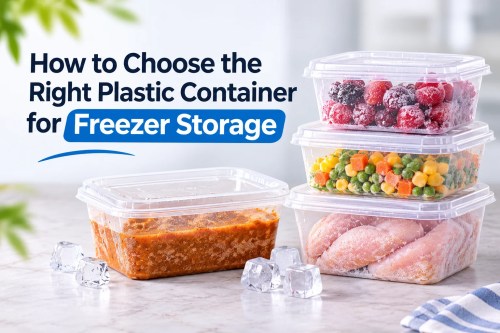
Choosing the right food packaging material is important for restaurants, takeaway businesses, cafés, catering services, and food manufacturers. Two commonly used materials are polypropylene (PP) and polyethylene terephthalate (PET). Although both are widely used in food packaging, they have different properties that make them suitable for different applications.
Understanding the difference between PP vs PET plastic food containers can help businesses select packaging based on food temperature, durability, presentation, storage conditions, and customer convenience. Whether you are packaging hot meals, fresh salads, desserts, or ready-to-eat food, choosing the appropriate material helps maintain food quality and improves the overall packaging experience.
What Are PP Plastic Food Containers?
Polypropylene, commonly known as PP, is a thermoplastic polymer frequently used to manufacture food storage containers, takeaway boxes, microwaveable meal trays, and reusable food packaging.
PP containers are popular because they are lightweight, durable, and generally more heat-resistant than standard PET containers. Their ability to withstand relatively high temperatures makes them suitable for many hot-food applications.
Key Features of PP Food Containers
-
Heat resistance: Suitable for many hot meals and certain microwave applications when specifically designed and labeled for microwave use.
-
Lightweight construction: Easy to transport, stack, and store.
-
Chemical resistance: Resists many oils, fats, and common food ingredients.
-
Durability: Offers flexibility and resistance to cracking during normal handling.
-
Reusability: Some PP containers are designed for repeated use when properly cleaned and maintained.
PP is identified by recycling resin code 5. However, the presence of this code does not automatically mean a container is microwave-safe or accepted by local recycling facilities.
What Are PET Plastic Food Containers?
Polyethylene terephthalate, or PET, is another widely used plastic material in food packaging. It is particularly popular for transparent food containers, beverage bottles, salad bowls, bakery packaging, and cold-food applications.
One of PET’s biggest advantages is its clarity. PET containers can provide excellent product visibility, making them attractive for businesses that want customers to see the freshness, colors, and presentation of packaged food.
Key Features of PET Food Containers
-
Excellent transparency: Makes food products clearly visible.
-
Lightweight packaging: Convenient for transportation and retail display.
-
Good rigidity: Helps containers maintain their shape during handling.
-
Moisture and gas barrier properties: Useful for certain food packaging applications.
-
Cold-food suitability: Commonly used for salads, fruits, desserts, and chilled meals.
PET is identified by recycling resin code 1. Standard PET food containers are generally not suitable for microwave heating unless specifically engineered and approved for that purpose.
PP vs PET Plastic Food Containers: Main Differences
Although PP and PET are both food-contact packaging materials, their performance differs across several important factors.
1. Heat Resistance
Heat resistance is one of the most important differences between PP and PET food containers.
PP generally offers better heat resistance than standard PET. This makes properly designed PP containers suitable for packaging many freshly prepared hot meals, such as rice, pasta, curries, and other takeaway dishes.
Standard PET containers are more commonly used for cold and room-temperature foods because exposure to high temperatures can cause deformation.
However, not every PP container is suitable for microwave heating. Microwave suitability depends on the container’s formulation, thickness, design, and manufacturer instructions.
Best choice: PP is generally better for hot-food packaging, provided the specific container is rated for the intended temperature.
2. Transparency and Food Presentation
PET containers are usually preferred when product visibility is a priority.
Their clear appearance allows customers to inspect packaged salads, fruits, sandwiches, cakes, and desserts without opening the packaging.
PP containers can also be translucent or transparent, but conventional PP packaging often has a less glass-like appearance than PET.
For supermarkets, bakeries, and cafés, attractive food presentation can influence purchasing decisions.
Best choice: PET is usually better for clear food displays and retail presentation.
3. Strength and Durability
Both materials offer useful mechanical properties, but they behave differently under pressure.
PP is generally more flexible and can withstand repeated bending better than rigid PET in many container designs. This flexibility is useful for reusable food containers and hinged packaging components.
PET is typically more rigid and dimensionally stable, which helps transparent packaging maintain its shape.
Actual strength depends on material grade, wall thickness, manufacturing method, and container design.
Best choice: PP for flexibility and repeated handling; PET for rigid, clear packaging.
4. Food Safety
Both PP and PET can be used safely for food packaging when they are manufactured from appropriate food-contact materials and used according to their intended conditions.
Food safety depends on several factors, including:
-
Whether the material meets applicable food-contact regulations
-
The type of food being packaged
-
Storage and serving temperatures
-
Duration of food contact
-
Manufacturer specifications and intended use
Neither PP nor PET should be considered universally safer than the other.
For example, a properly manufactured PET container can be suitable for cold salads, while an appropriately rated PP container can be suitable for hot meals.
Best choice: Select a food-contact-compliant container that matches the food type, temperature, and intended use.
5. Recycling and Environmental Considerations
PP and PET are both technically recyclable materials, but recycling availability differs by location and packaging type.
PET carries recycling code 1 and has established recycling streams in many markets, particularly for beverage bottles. However, not all PET food trays and containers are accepted by recycling programs.
PP carries recycling code 5 and can also be recycled where suitable collection and processing facilities exist.
Food contamination, labels, mixed materials, and local recycling infrastructure can affect whether a container is actually recycled.
Neither material is biodegradable under ordinary environmental conditions.
Best choice: The more practical recycling option depends on the packaging format and available local recycling systems.
6. Cost and Packaging Efficiency
The price of PP and PET containers varies according to size, thickness, design, order quantity, manufacturing method, and supplier.
PP can be an economical choice for standard takeaway meal boxes and reusable food storage containers.
PET is often selected for premium-looking transparent packaging where visibility and presentation are important.
Instead of comparing material prices alone, businesses should consider the complete packaging cost, including lids, transportation, storage, damage rates, and suitability for the packaged food.
Best choice: Compare equivalent container specifications and total packaging costs before purchasing.
PP vs PET Food Containers: Which Is Better for Different Foods?
The ideal packaging material depends on the type of food being served, its temperature, and how customers will use the container.
PP Containers for Hot Meals and Takeaway Food
PP containers are commonly used by restaurants, cloud kitchens, and catering businesses that serve freshly prepared meals.
They are suitable for applications such as:
-
Rice dishes and biryani
-
Pasta and noodles
-
Curries and cooked vegetables
-
Grilled chicken and other cooked meals
-
Meal-preparation portions
For takeaway businesses in Pakistan, PP containers can be particularly useful because many popular dishes are served hot and contain oils, sauces, or gravies.
Restaurants should select containers with secure, properly fitted lids to reduce leakage during delivery. The container should also be rated for the temperature of the food being packed.
PET Containers for Salads, Fruits, and Desserts
PET food containers are frequently used for products that benefit from clear packaging and attractive presentation.
Common applications include:
-
Fresh fruit salads
-
Cold sandwiches
-
Bakery products and pastries
-
Cakes and chilled desserts
-
Cold pasta salads
-
Ready-to-eat refrigerated snacks
PET’s transparency makes it particularly useful for cafés, bakeries, supermarkets, and dessert businesses.
Customers can easily see the product before purchasing, while suitable packaging helps protect food from handling and external contamination.
Can You Microwave PP and PET Plastic Food Containers?
Microwave compatibility is an important consideration when choosing food packaging.
Some PP food containers are designed specifically for microwave use. However, the PP recycling symbol alone does not guarantee that a container is microwave-safe.
Businesses should verify the manufacturer’s microwave instructions, including recommended heating duration and temperature limitations.
Standard PET containers should generally not be placed in a microwave. Specially engineered PET materials, such as certain crystallized PET (CPET) products, may be designed for higher-temperature applications, but these should not be confused with ordinary clear PET containers.
For restaurants offering reheatable meals, clearly labeled microwave-safe PP packaging is often a practical option.
How to Identify PP and PET Plastic Food Containers
Many plastic food containers include a resin identification code, usually displayed as a number inside a triangular symbol.
PP Plastic – Code 5
Often used for hot-food boxes, meal trays, and reusable containers.
PET Plastic – Code 1
Often used for transparent salad boxes, fruit containers, and bakery packaging.
These codes identify the plastic resin family. They do not independently confirm food-contact compliance, microwave safety, or local recyclability.
Businesses should also check packaging specifications, supplier certifications, and intended-use instructions.
How to Choose the Right Plastic Food Container for Your Business
Choosing between PP and PET should involve more than appearance or price.
Consider Food Temperature
Start by identifying whether your food will be packaged hot, chilled, or at room temperature.
PP is often the better option for hot takeaway meals, while standard PET is more suitable for cold-food applications.
Evaluate Packaging Presentation
If customers need to see the food clearly, PET packaging can provide an advantage.
For example, a bakery displaying colorful desserts may benefit from transparent PET boxes, while a restaurant selling hot biryani may prioritize the temperature resistance and durability of PP containers.
Check Lid Quality and Leak Resistance
The container material alone does not determine whether packaging is leakproof.
Look for compatible lids, reliable closures, and suitable sealing designs. Businesses selling curries, sauces, and gravies should test containers under realistic delivery conditions.
Consider Storage and Transportation
Stackable containers can help businesses organize storage areas and transport orders more efficiently.
Evaluate whether the packaging can withstand normal stacking pressure, handling, and movement without cracking, opening, or deforming.
Test Before Buying in Bulk
Before placing a large packaging order, test sample containers with the actual food products.
Check whether the packaging maintains its shape, closes securely, prevents leakage, and performs well during the expected delivery or storage period.
This approach helps businesses avoid unnecessary packaging costs and customer complaints.
Common Mistakes Businesses Make When Choosing PP or PET Containers
Even experienced food businesses can make packaging mistakes when selecting containers based only on price or appearance.
One common mistake is using standard PET containers for hot food without checking temperature suitability. Another is assuming that every PP container is microwave-safe.
Businesses may also overlook lid compatibility, purchase containers that are too small for their portions, or choose packaging that does not protect food adequately during transportation.
A further mistake is assuming that recycling symbols guarantee local recyclability. Businesses should check the actual recycling options available in their market before making environmental claims.
Choosing packaging based on tested performance, rather than assumptions, helps prevent these problems.
PP vs PET Containers for Restaurants and Food Delivery Businesses in Pakistan
In Pakistan, food businesses often need packaging that can handle different serving temperatures, delivery conditions, and food types.
For restaurants selling hot rice dishes, curries, and prepared meals, suitable PP containers can be a practical choice.
Meanwhile, bakeries, dessert shops, supermarkets, and cafés may prefer PET containers for chilled food products that require attractive presentation.
Cloud kitchens offering both hot meals and cold desserts may benefit from using both materials rather than relying on one type of packaging for every menu item.
For example, a food delivery business could use a heat-rated PP container for hot pasta and a clear PET container for a chilled fruit dessert.
This packaging strategy allows each product to be packed according to its individual requirements.
Find Suitable Food Packaging Containers at Disposable Factory
Choosing the right packaging is an important part of maintaining food quality and providing a reliable takeaway experience.
Disposable Factory helps food businesses in Pakistan explore disposable food packaging options for restaurants, cafés, catering services, bakeries, and takeaway operations.
Whether you need containers for hot meals, cold salads, desserts, or food delivery, selecting the right material, size, and closure design can improve packaging efficiency.
Explore the food packaging container options available at Disposable Factory and choose products that match your business requirements.
Frequently Asked Questions About PP vs PET Plastic Food Containers
1. What is the main difference between PP and PET food containers?
The main difference is their material properties. PP generally provides better heat resistance and flexibility, while PET offers excellent transparency and rigidity, making it popular for cold-food packaging.
2. Is PP plastic better than PET for food storage?
Neither material is universally better. PP is often suitable for hot meals and certain reusable containers, while PET is commonly preferred for transparent cold-food packaging.
3. Are PP food containers microwave-safe?
Some PP food containers are microwave-safe, but not all. Always check the manufacturer’s instructions and microwave-safe labeling before heating food.
4. Can PET plastic containers hold hot food?
Standard PET containers are generally intended for cold or room-temperature applications. Hot-food suitability depends on the specific PET formulation and the manufacturer’s temperature rating.
5. Which plastic is safer for food, PP or PET?
Both can be suitable for food contact when manufactured to applicable safety standards and used correctly. Safety depends on the product’s intended use, food type, temperature, and compliance with relevant regulations.
6. Which is better for takeaway food, PP or PET?
PP is generally preferred for many hot takeaway meals, while PET is commonly used for cold salads, fruits, bakery items, and chilled desserts.
7. Are PP and PET containers recyclable?
Both materials are technically recyclable. However, actual recycling depends on local facilities, container design, material sorting, and contamination.
8. Which container is better for food presentation?
PET usually offers better optical clarity, making it particularly useful for retail displays and food products where visibility is important.
9. Can PP containers be reused?
Some PP containers are designed for repeated use. Reusability depends on the manufacturer’s instructions, container condition, cleaning requirements, and intended application.
10. How can restaurants choose between PP and PET containers?
Restaurants should consider food temperature, packaging appearance, lid security, portion size, transportation requirements, and supplier specifications before selecting a material.
Final Thoughts
Understanding the differences between PP and PET plastic food containers helps businesses make more informed packaging decisions.
PP is generally a practical option for hot-food packaging because of its heat resistance and flexibility. PET is commonly preferred for cold-food packaging because of its clarity and rigid structure.
The best choice ultimately depends on the specific food product, serving temperature, storage conditions, and packaging requirements.
For restaurants, cafés, cloud kitchens, and food retailers, using the appropriate container material can help protect food quality, improve presentation, and support a better customer experience.